
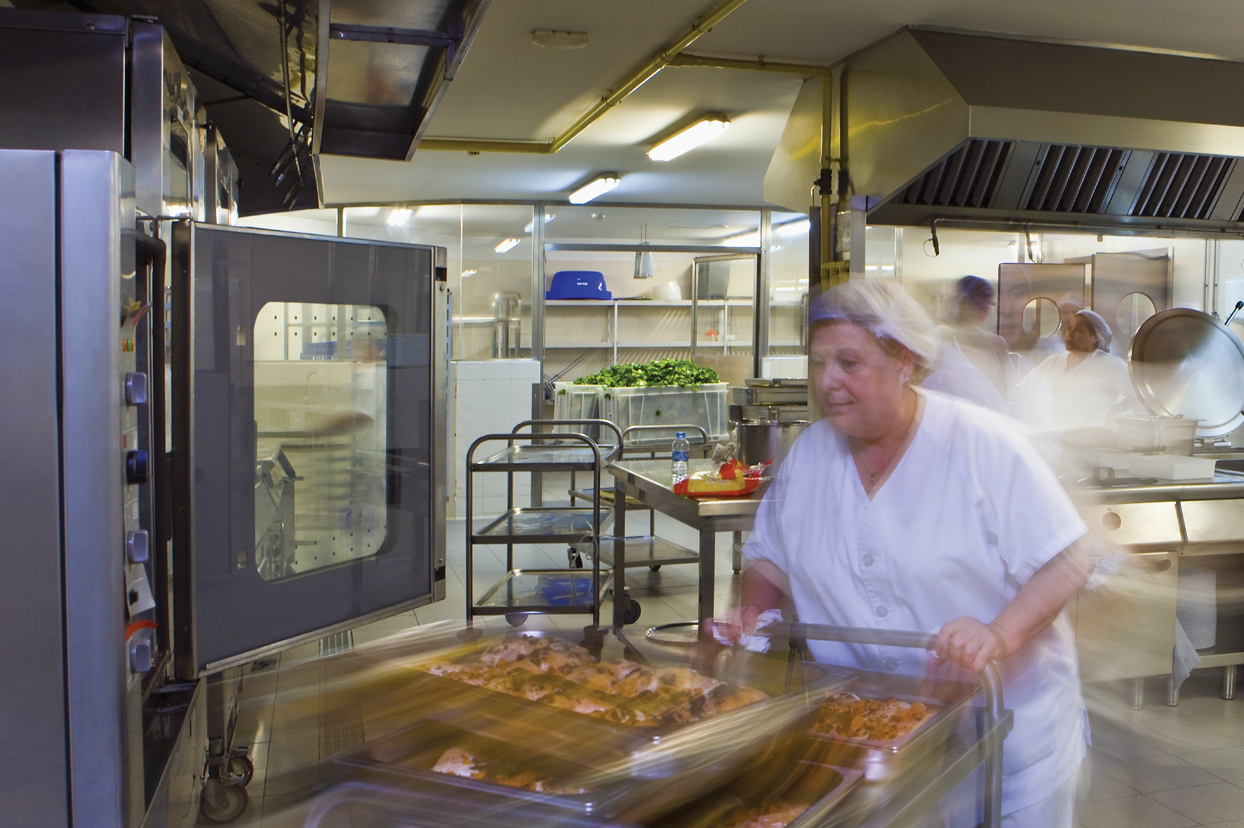
It’s easy to see why employees who work in kitchen environments are at risk for slip-and-fall injuries. When you combine fast-moving workers with spills from dishwashing and food preparation, serious injuries can result.
Encourage or require your employees to wear slip-resistant shoes to reduce the risk of injuries. A good pair of slip-resistant shoes will significantly reduce the potential to slip on water, oil or soap. And because they are comfortable, available in many styles and generally no more expensive than non-slip-resistant shoes, there’s really no reason not to use them.
A side-benefit of requiring slip-resistant shoes is the potential to reduce the number of floor mats commonly used in kitchens, resulting in reduced costs and reduced risks related to handling the mats.
Slip-resistant shoe basics
- High-quality slip-resistant shoes look and feel like other shoes, but they’re built to increase traction through special sole materials and tread design.
- Look for the statement “slip resistant” (or something similar) stamped onto the sole of the shoe, not just on the box.
- They are designed to be most effective on liquids and grease. It’s generally advised not to wear the shoes in snow, as it can pack into the soles.
- Find them at shoesforcrews.com or through local vendors.
- If you can’t completely eliminate water, soap or grease from your employees’ work environment, slip-resistant footwear is an absolute must for injury prevention.
This is not intended to serve as legal advice for individual fact-specific legal cases or as a legal basis for your employment practices.