

Check out our infographic to see how improving your workers’ compensation processes can save you time and money. For a printable version, click here. You can also find the text below.
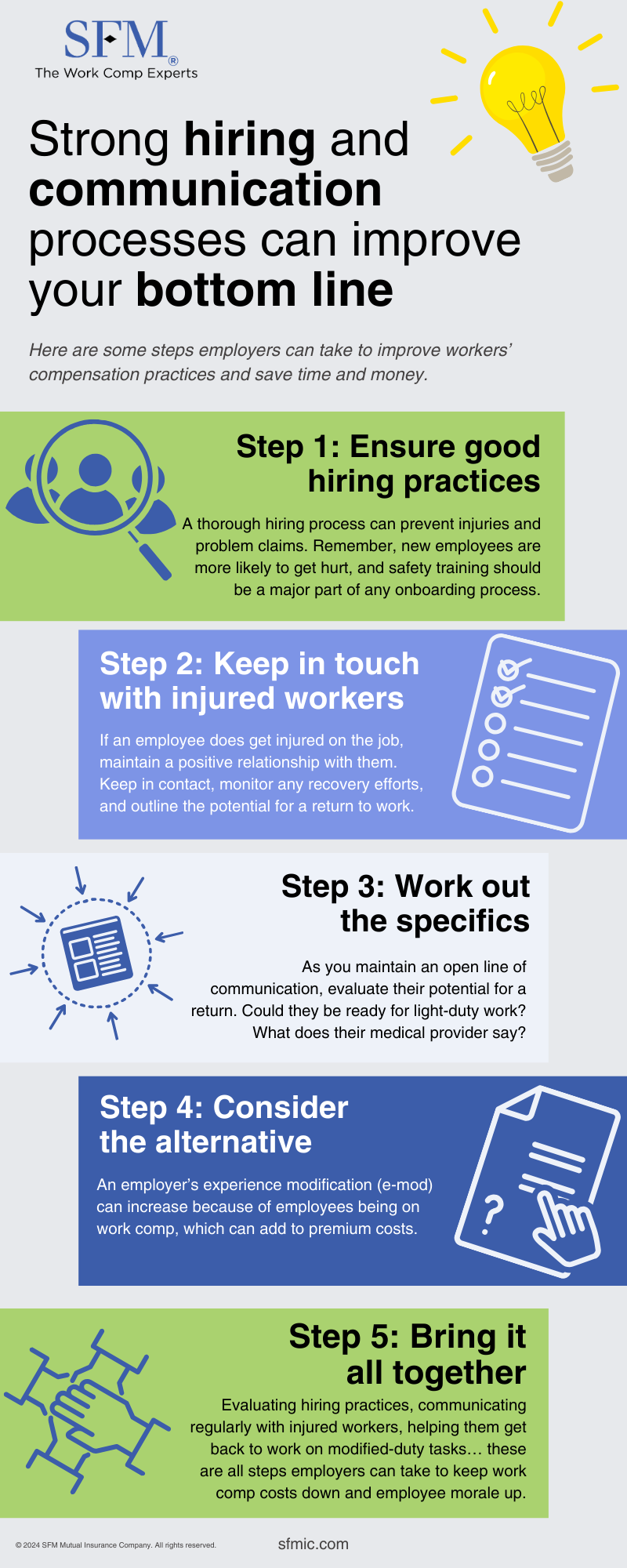
Strong hiring and communication processes can improve your bottom line
Here are some steps employers can take to improve workers’ compensation practices and save time and money.
Step 1: Ensure good hiring practices
A thorough hiring process can prevent injuries and problem claims. Remember, new employees are more likely to get hurt, and safety training should be a major part of any onboarding process.
Step 2: Keep in touch with injured workers
If an employee does get injured on the job, maintain a positive relationship with them. Keep in contact, monitor any recovery efforts, and outline the potential for a return to work.
Step 3: Work out the specifics
As you maintain an open line of communication, evaluate their potential for a return. Could they be ready for light-duty work? What does their medical provider say?
Step 4: Consider the alternative
An employer’s experience modification (e-mod) can increase because of employees being on work comp, which can add to premium costs.
Step 5: Bring it all together
Evaluating hiring practices, communicating regularly with injured workers, helping them get back to work on modified-duty tasks… these are all steps employers can take to keep work comp costs down and employee morale up.