
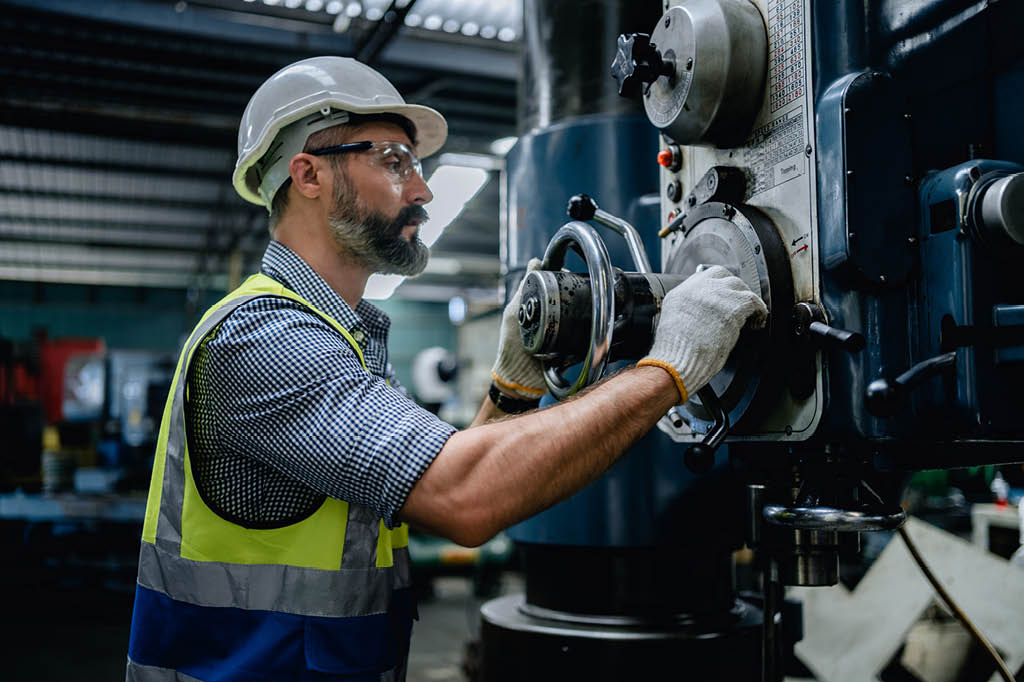
Machines make countless jobs easier and more efficient, but their moving parts, operating processes and even energy sources can expose workers to serious hazards.
Machinery-related injuries often occur when workers come into contact with the equipment, moving parts or other surfaces. Depending on the circumstances, these incidents can lead to “caught-in” injuries, amputations, burns and crushing injuries, according to an October 2026 post from the Centers for Disease Control and Prevention (CDC).
These injuries can be severe. According to the CDC:
- From 2018-2022, 3,677 workers were killed by contact with objects and equipment
- In 2022, there were 5,846 fatalities, and fatalities that were likely machinery related (contact with objects and equipment) accounted for 738 out of 5,846 total fatalities (12.6%)
Whether employees are operating, cleaning or maintaining equipment, understanding how a machine works and the hazards it creates is an important first step toward preventing injuries.
Here are key practices to help employees work more safely with and around machinery.
Know the machine before you use it
Before operating machinery, employees should be properly trained on its use and safety features. Pre-task planning should also include setting up the work environment correctly and ensuring necessary guards are in place before the equipment is turned on.
Different machines create different hazards, and operators need to understand the equipment they’re using. Pay particular attention to moving components such as:
- Rotating parts
- Reciprocating arms
- Belts
- Meshing gears
- Cutting teeth
- Other moving parts and points of rotation
Employees should not hesitate to ask for help if a machine isn’t operating correctly or a guard is missing.
Keep machine guards in place
Machine guards are an important line of defense between workers and dangerous moving components.
The Occupational Safety and Health Administration (OSHA) reminds employers that machine guarding is intended to protect operators and other employees in the work area from hazards created by nip points, rotating parts, flying chips and sparks. OSHA notes safeguards such as barrier guards, light curtains and two-hand operating devices that can help keep workers safe.
Machine operators should never remove a guard simply because it makes a task faster or more convenient. Workers should not remove guards and know how to use safety devices associated with their equipment. Learn more with our Machine guarding 5-minute solution.
For woodworking equipment, for example, belts, pulleys, gears, shafts and moving parts should be guarded. The possibility of contacting a circular saw beneath or behind the table should also be addressed with an exhaust hood or guard.
Dress for the job
What an employee wears can also make a difference when it comes to safety.
Before beginning work, secure anything that could come into contact with moving components. That includes:
- Removing jewelry
- Tying back long hair
- Rolling up long sleeves
- Avoiding loose clothing
- Not wearing gloves around rotating parts
These precautions should be part of the routine before a machine is started, along with verifying that the work area is ready.
Inspect equipment and address problems
Routine inspections can help identify problems before an employee encounters them during operation.
SFM’s woodworking machinery assessment, for example, addresses conditions ranging from guards and power controls to saws, knives, cutting heads and bearings. It calls for dull, improperly set, filed or tensioned saws to be removed from service, cracked saws to be removed immediately, and knives and cutting heads to be kept sharp, properly adjusted and firmly secured.
The same principle applies to specialized machinery. SFM’s laser-safety resource recommends periodic and pre-use inspections to ensure guards, covers and interlocks are properly positioned and functioning.
If equipment isn’t working correctly or a required safeguard is missing, don’t improvise a workaround.
Control hazardous energy before servicing equipment
Turning a machine off isn’t necessarily the same as making it safe to service.
Machines can contain electrical, mechanical, hydraulic, pneumatic, chemical, thermal and other forms of hazardous energy. During servicing and maintenance, unexpected startup or the release of stored energy can cause serious or fatal injuries, according to OSHA.
Employers should follow applicable lockout/tagout requirements and their established energy-control procedures when employees service or maintain equipment. OSHA’s Control of Hazardous Energy standard for general industry establishes employer responsibilities for protecting workers from hazardous energy.
Keep the work area clean
Good housekeeping also supports safe machinery operation.
Maintaining a clean work environment and keeping the area around machines free of debris are good practices. At the same time, cleanliness around machinery helps ensure guards can function properly and fire hazards are prevented.
Establishing housekeeping as part of normal machine operation, rather than something done only at the end of a shift, can help keep work areas ready for safe use.
Account for machine-specific hazards
General machine-safety practices are a starting point, not a substitute for understanding the particular equipment being used.
Laser-equipped machinery is one example. These machines carry potential hazards involving the eyes and skin, plus other potential dangers associated with compressed gases, cryogenic materials, toxic or carcinogenic materials, and noise.
For laser equipment, safeguards can include determining the machine’s laser classification, providing appropriate employee training and PPE, inspecting interlocks and guards, and following approved operating procedures.
Other machinery may require similar equipment-specific controls. Employers and employees should follow applicable regulations, company procedures and equipment manufacturers’ instructions.
Make machine safety part of every job
Effective machine safety starts before anyone presses the start button.
Employees need to understand the equipment, recognize potential hazards and know the safeguards designed to protect them. Guards need to remain in place, machinery needs to be maintained, work areas need to stay orderly, and hazardous energy needs to be properly controlled during applicable servicing or maintenance activities.
Most importantly, employees should never take a shortcut around a machine safeguard. If equipment isn’t operating correctly, a guard is missing or something about the task doesn’t look safe, stop and address the problem before continuing.