
Managing work injuries
Work injuries are unfortunate, but following best practices can make bad situations better for you and injured employees.
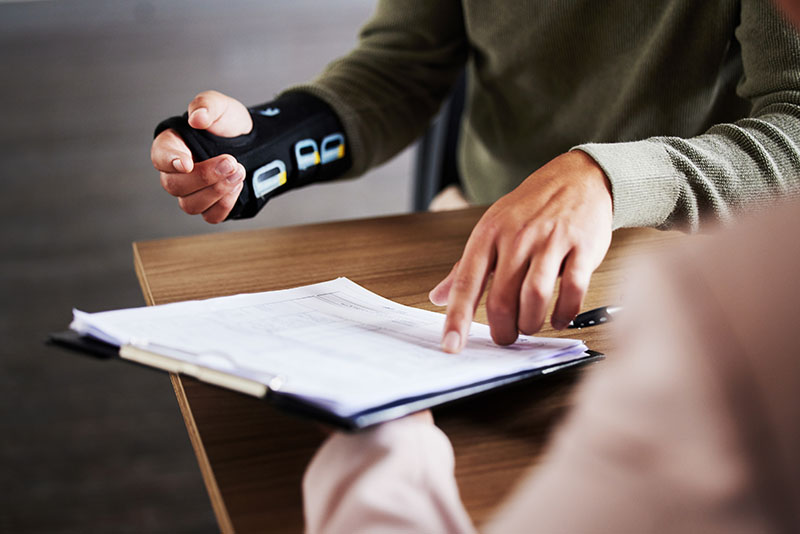
Work injuries are unfortunate, but following best practices can make bad situations better for you and injured employees.
Here are ways to be ready if your employees get hurt at work:
We offer a claim packet that contains all of these items in one place, along with additional information on reporting claims and return to work.
When you or a supervisor become aware of a work injury, you become responsible for reporting it to SFM as soon as you can. In most states, “employer notice” of an injury can include:
Once you learn of an injury, the clock starts ticking toward state deadlines to either pay or deny workers’ comp benefits. You can help your employee get the right care and avoid fines by reporting all injuries as soon as you learn of them, even if they seem minor.
Learn about avoiding common mistakes when reporting work injuries
Report a work injury to SFM as soon as possible after learning about it – ideally, within 24 hours. You may not have all the details at the time of the report, but tell us as much information as you can. Any missing information can be addressed later with your SFM claims representative.
The most common and preferred methods for reporting injuries to SFM are online or by phone. If these methods don’t work for you, you also have the option to download your state’s paper fax First Report of Injury form and fax it to SFM.
Learn more on the Report an injury page.
For more information, download a copy of our claim packet. We also have a claim packet tailored for employees, as well.
After your employee’s immediate medical needs are taken care of, follow these four steps:
Tip: To help injured workers better understand what to expect for their recovery and return to work, have them visit the injured workers section of our website and check out the available video.
Tip: Use our CompOnline® risk management system to keep up with claim developments such as viewing claim details and tracking payments.
Tip: If you are outside of Minnesota, Wisconsin, Iowa, Nebraska, Kansas, South Dakota, Indiana, Tennessee and Missouri, you will need the CBCS temporary prescription form instead, which is available through your claims representative.
Getting an employee back to work after an injury is beneficial to both the injured worker and the employer.
For the employee, getting back to work — even on a limited basis — helps them recover quicker, feel productive and keep up the routine of working. For employers, getting an injured employee back on the job can help control claims costs and reduce the likelihood of litigation.
Some tips for return to work include:
State laws grant employers access to injured employees’ medical records to see work restrictions ordered by physicians.
Keep these rules in mind when handling confidential medical records:
The Health Insurance Portability and Accountability Act (HIPAA) generally allows employers to discuss an injured employee’s progress and medical status related to a work injury with the employee’s treating physician. Medical providers may be unclear about the HIPAA law as it applies to workers’ comp and may be reluctant to give you information. If this happens, call your claims representative at 800-937-1181.
View workers’ comp disclosures from U.S. Department of Health and Human Services
Fraud is rare, but sometimes employees do intentionally misrepresent the facts surrounding their work injuries.
Even if you suspect fraud, report the injury to SFM right away just as you would with any other work injury, and let your claims representative know your concerns or report potential fraud on our website.
SFM’s Special Investigations Unit and in-house attorneys are prepared to investigate, evaluate and pursue fraudulent claims.


